What if the future of global trade is decided not just by what you produce, but how long it lasts?
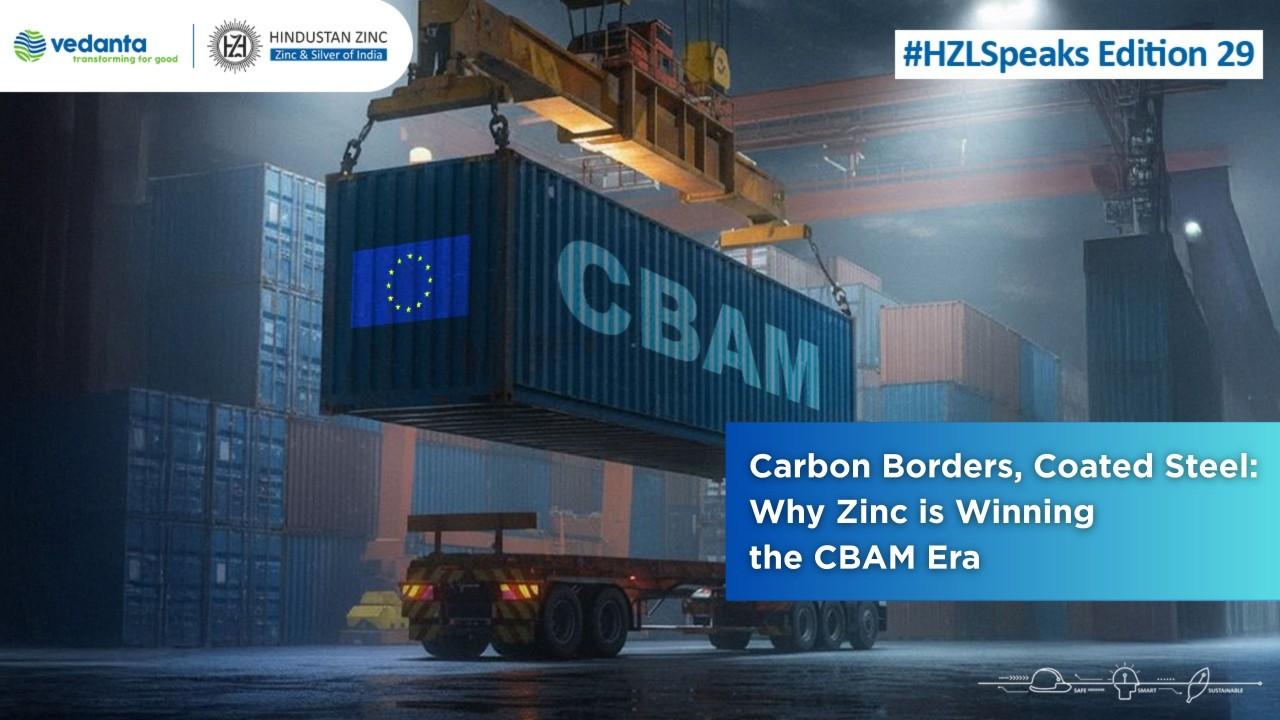
In this edition of #HZLSpeaks, we explore how Europe’s Carbon Border Adjustment Mechanism (CBAM) is reshaping metal choices across industries and why zinc is emerging as a strategic advantage in a carbon-conscious world.
CBAM is more than a trade policy; it is reshaping the competitiveness of industrial metals. By attaching a carbon cost to imported goods like steel, it rewards producers who can demonstrate lower lifecycle emissions. This fundamentally changes the equation, from cost efficiency alone to durability, longevity, and embedded carbon.
This is where zinc plays a defining role.
A majority of global zinc consumption goes into galvanization, coating steel to protect it from corrosion. While the science is simple, the impact is significant. A thin layer of zinc can extend the life of steel by decades, reducing the need for frequent repairs, replacements, and resource-intensive rebuilds. In a CBAM-driven world, this translates directly into lower cumulative emissions over an asset’s lifecycle.
For sectors like infrastructure, renewable energy, transmission, and automotive, this advantage is no longer optional; it is strategic. As carbon accounting becomes stricter, materials that deliver longevity without increasing emissions will define competitiveness.
Taking this a step further, Hindustan Zinc’s EcoZen, Asia’s first low-carbon zinc, redefines what sustainable galvanization can look like. Produced using 100% renewable energy, EcoZen has a carbon footprint of less than 1 tonne of CO2 per tonne of zinc, nearly 75% lower than the global average. This enables manufacturers to meaningfully reduce the embedded carbon of their products while maintaining performance and durability.
In essence, EcoZen allows industries to not just comply, but lead.
At the same time, zinc demand is steadily transitioning from being purely cyclical to structurally supported. With carbon pricing mechanisms gaining ground globally, demand for materials that enable longer asset life and lower emissions is becoming policy-driven. This positions zinc, particularly low-carbon zinc, as a critical enabler of the next industrial cycle.
CBAM does not explicitly mandate zinc. But it rewards exactly what zinc delivers, longevity, efficiency, and lower lifecycle emissions.
For Indian exporters and global manufacturers navigating this new landscape, the message is clear: competitiveness will be built not just on what you make, but how responsibly, and how durably, you make it.